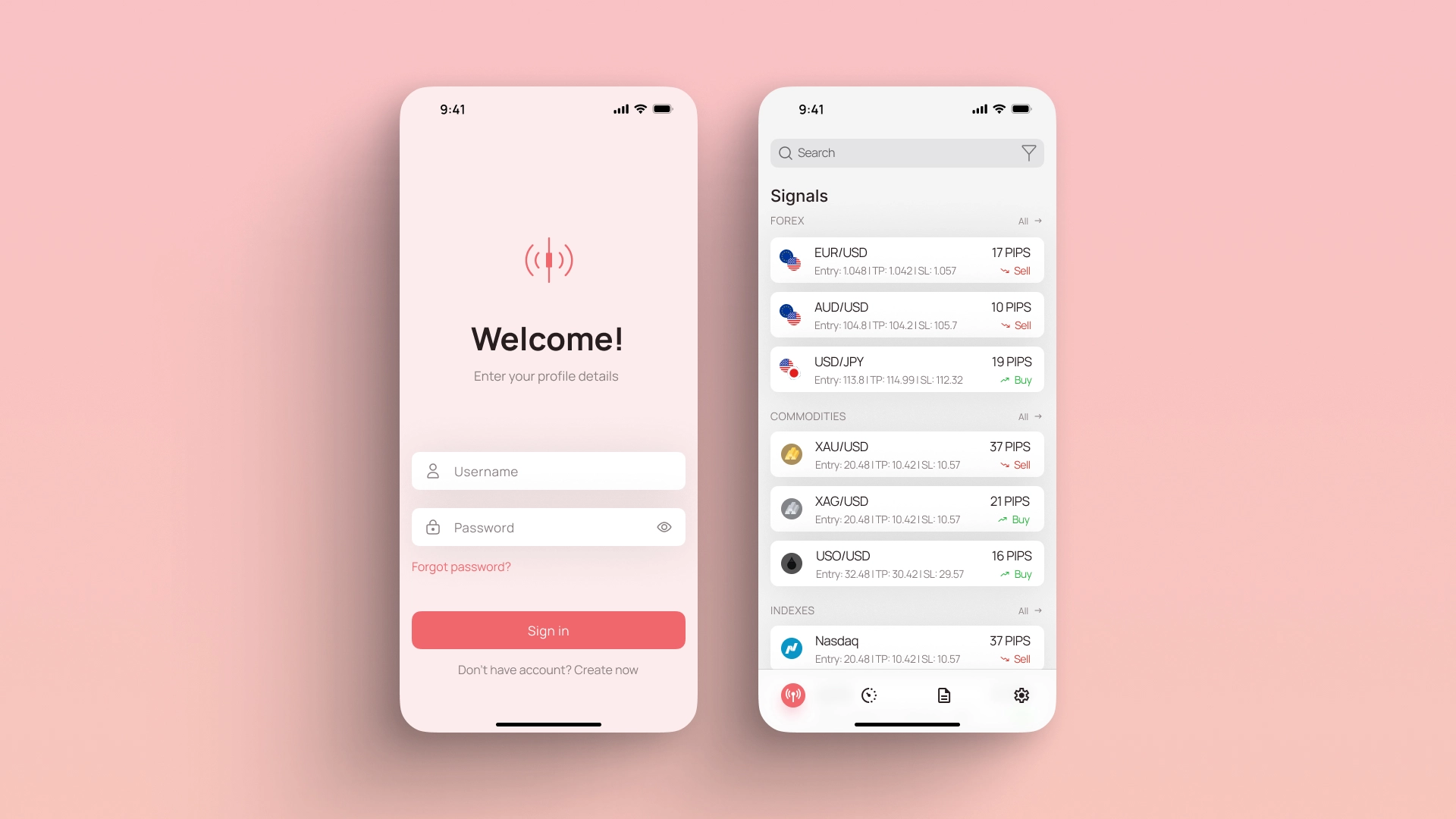
FlareFX — Mobile App

About
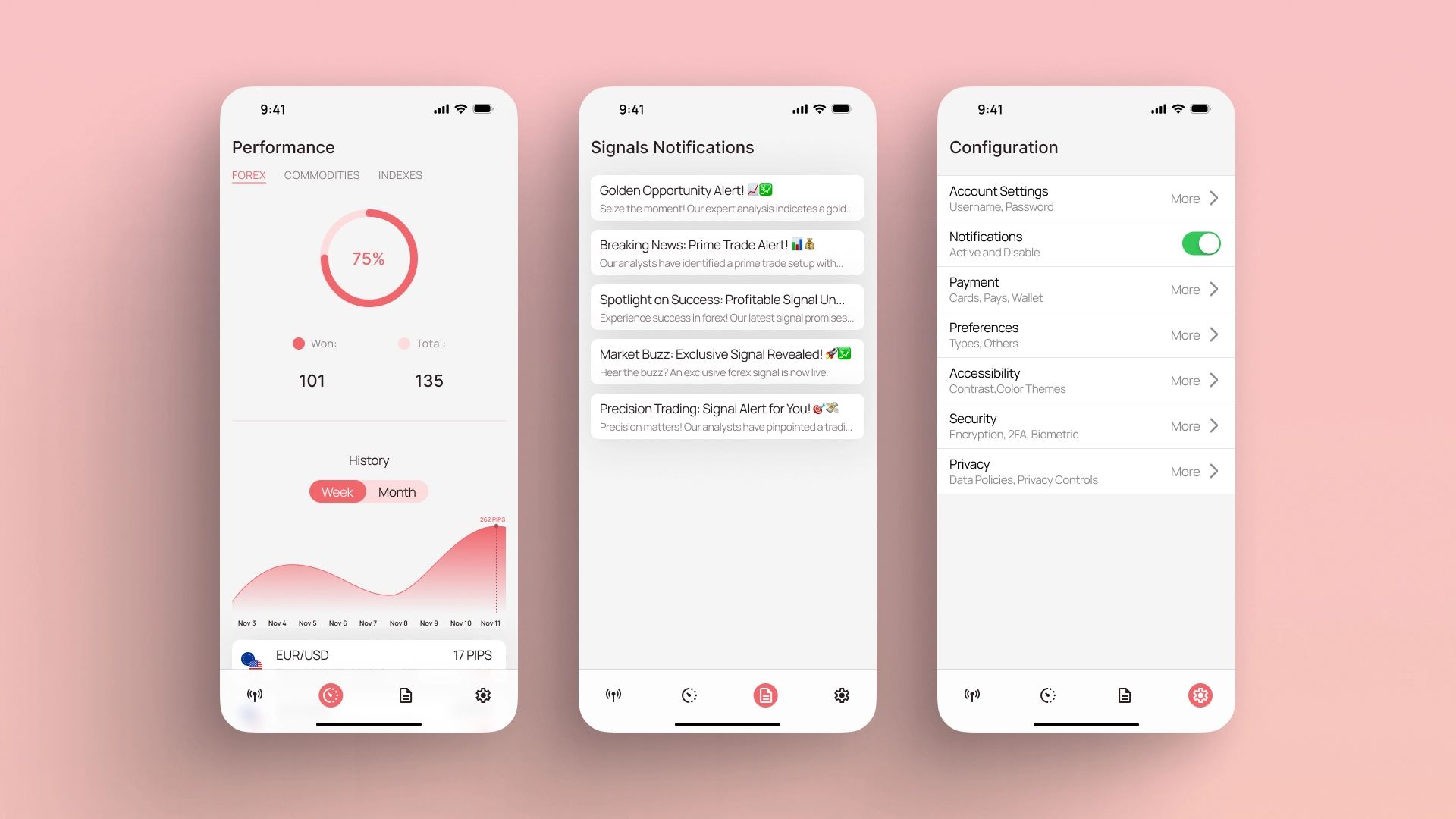
What sets FlareFx apart is its commitment to keeping traders informed and empowered. Through timely notifications, users receive updates on the latest Forex signals.
FlareFx offers more than just signals—it provides traders with the tools they need to succeed. Comprehensive performance tracking, including detailed stats and technical analysis data, empowers traders to assess their strategies and make informed decisions. Real-time signals further enhance the trading experience, enabling users to execute trades with precision timing. In essence, Flare Fx is not just a mobile app; it's a strategic partner for traders seeking to maximize their investment potential and achieve their trading goals with confidence.
Service
Ux/Ui Design, Ui Implementation, Ui Development.
Client
Trading Pal | Flare FX
Tools
Sketch, InVision, Adobe Xd, Adobe Photoshop, Adobe Illustrator.
Team
Ux Design Team, Developers and TP Traders.
📝 Note:
“Unlike Trading Pal, FlareFX didn’t require a full discovery process. The approach was to optimize an existing experience using lessons already validated in similar projects, reducing friction and prioritizing speed and clarity.”
🧩 Problem
FlareFX’s previous interface presented friction in a product where speed and clarity are critical:
• Poorly prioritized signals
• Excessive information on key screens
• Design that didn’t take advantage of full-screen displays
• Low perceived value in a paid product
• This directly impacted:
• User trust
• Execution speed
• Retention and conversion
🔍 Validate
Instead of extensive research, a context- and existing evidence-based approach was used:
• Sources used
• Previous user feedback
• Analysis of the existing product
• Patterns already validated in Trading Pal
• Quick analysis of Forex signal competitors (2018)
Key decision: reuse proven learnings in a similar product, reducing research time.
💡 Solution
The FlareFX redesign focused on:
• Clear signal hierarchy
• Critical information visible in seconds
• Optimized full-screen design for modern mobile devices
• Premium aesthetics befitting a subscription product
• Reduced friction between signal and action
📈 Result
Key Results:
• Faster, more direct experience
• Greater perceived product value
• Interface aligned with active Forex users
• Solid foundation for scaling future features
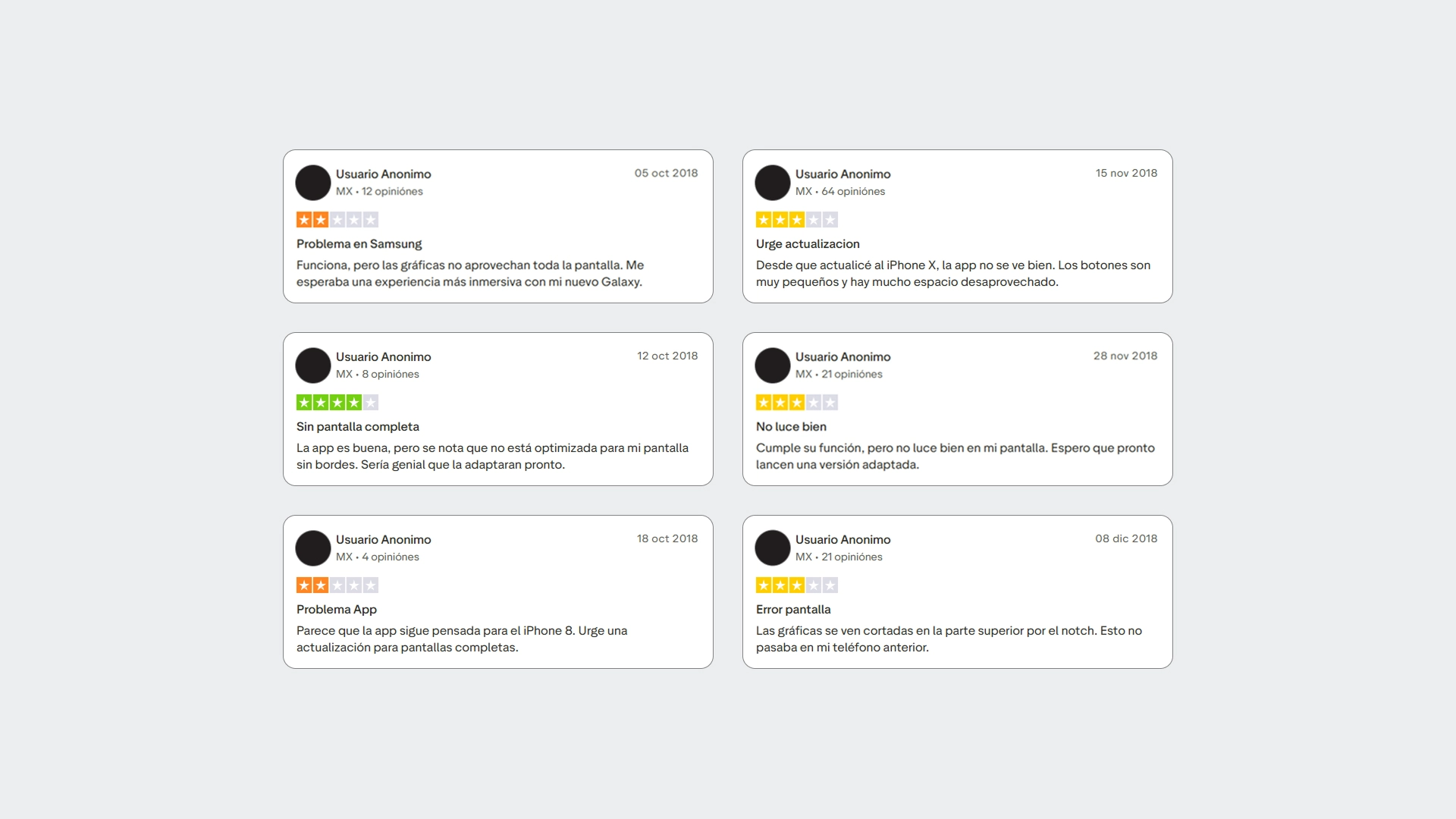
💬 Trustpilot — User Feedback Analysis
I analyzed real user reviews on Trustpilot to identify patterns of frustration and negative perceptions of the app before the redesign.
The comments revealed recurring problems related to an outdated interface, poor use of screen space on full-screen devices, and difficulty accessing critical financial information.
This analysis confirmed that the problem was not isolated, but rather a clear trend associated with the hardware change (iPhone X and Galaxy S8), serving as a starting point to justify a complete UX/UI redesign.
📋 Heuristic Evaluation
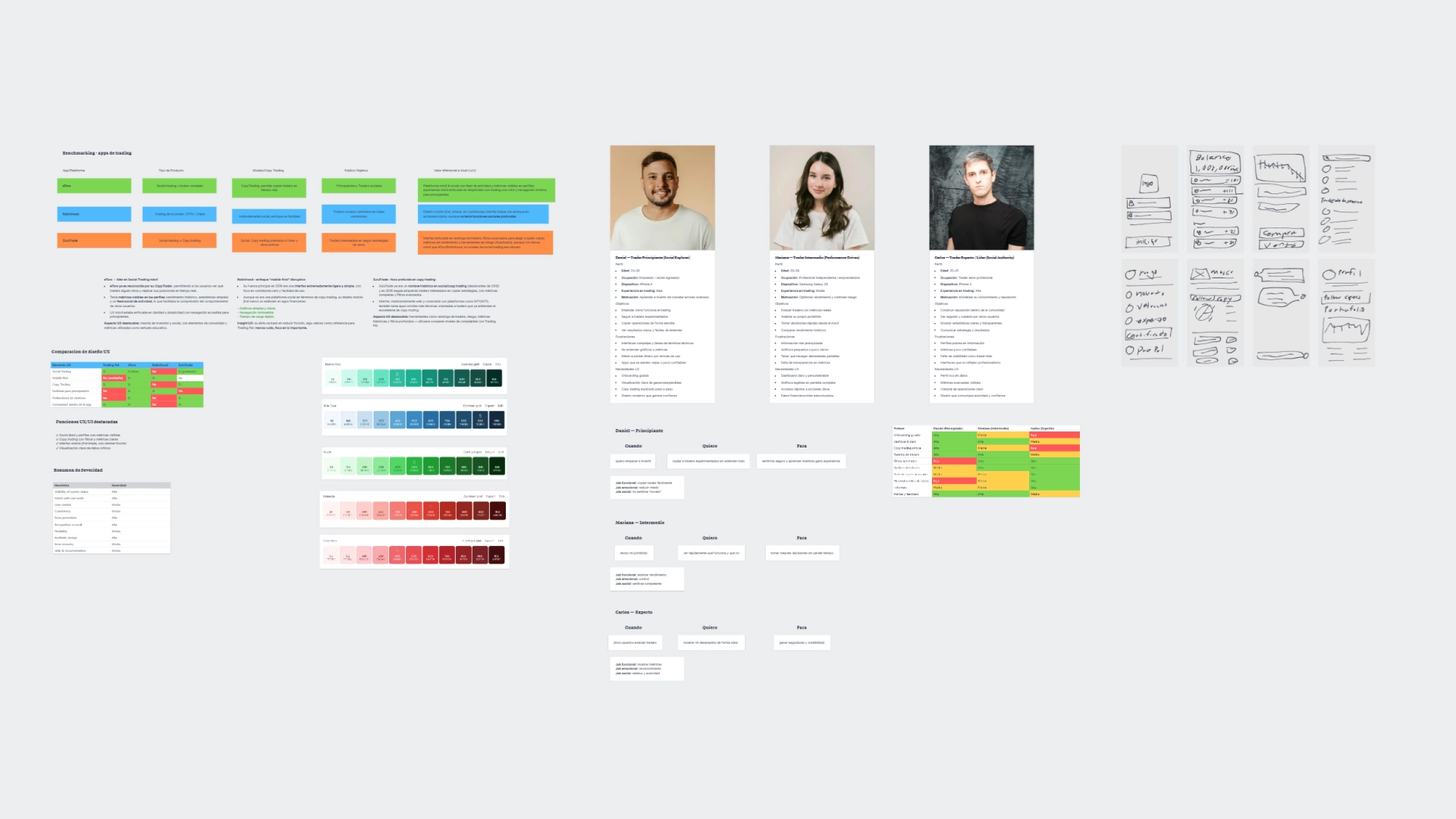
I conducted a light heuristic review based on Nielsen principles to quickly identify key friction points in the existing experience.
The focus was on information hierarchy, system feedback, and visual clarity—critical aspects in a product where speed of consumption is essential.
This analysis allowed me to detect obvious problems without the need for an extensive research process, serving as a basis for immediate design decisions.
📊 Benchmarking
I conducted a benchmarking study focused on Forex signal platforms and subscription-based financial products.
The goal wasn’t to compare features in depth, but rather to identify presentation patterns, visual hierarchy, and perceived value in premium products.
This analysis helped define how to display signals clearly, reliably, and in an action-oriented way, aligning FlareFX with realistic market expectations.
👤 Proto-Persona
Instead of multiple profiles, I defined a main proto-persona representing FlareFX’s target user: an active Forex trader who consumes signals several times a day and prioritizes speed over education.
Note: I directly used Carlos’s profile, as he is a professional trader.
This simplification allowed me to focus the design on a single objective: reducing friction between signal and execution, leading to clearer and more efficient decisions during the redesign.
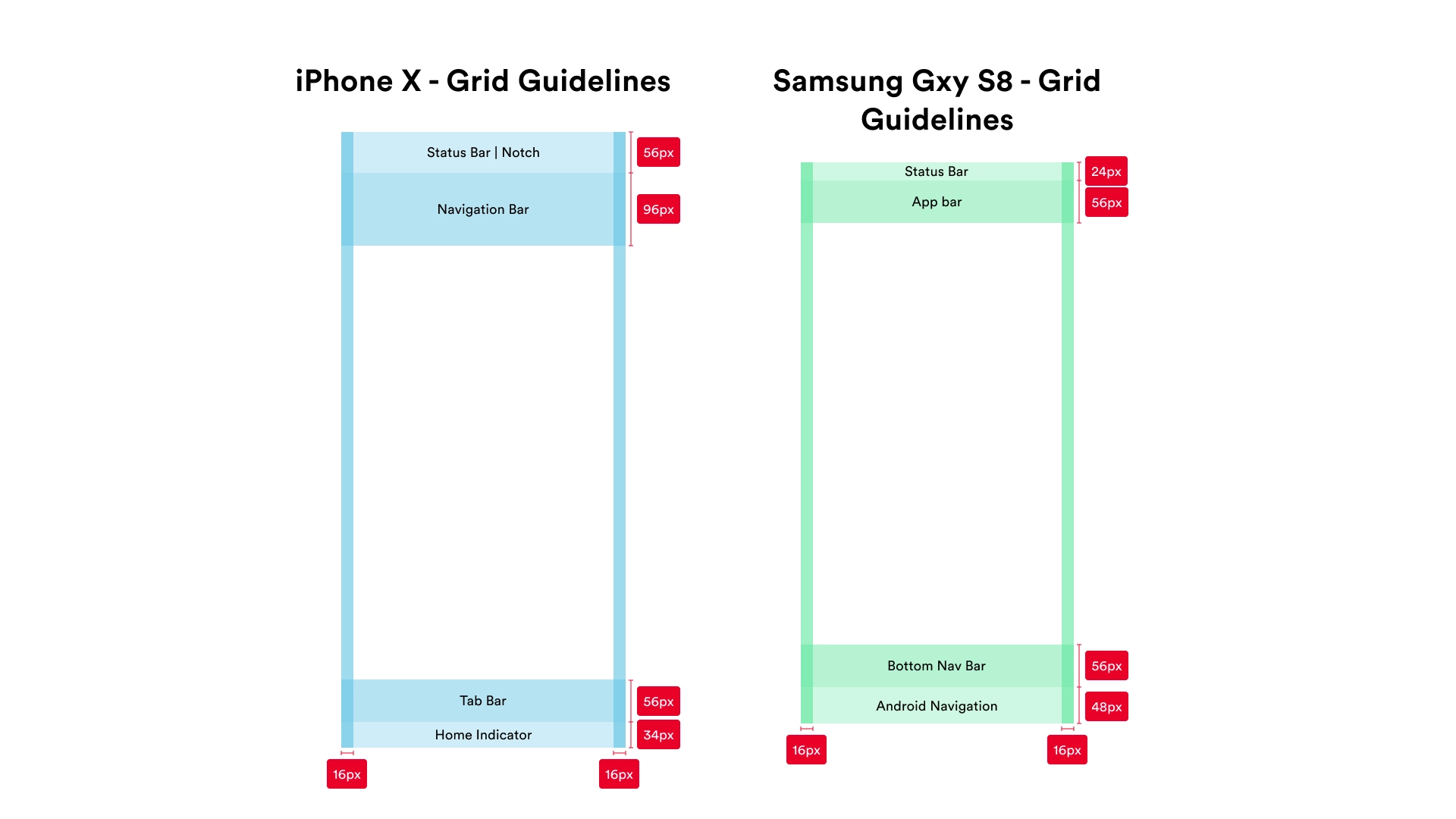
📐 Grid Guidelines — iPhone X & Samsung Galaxy S8
I studied the specific design guidelines and grids of the iPhone X and Samsung Galaxy S8, considering safe areas, notch, proportions, and native interaction patterns.
This analysis ensured that the redesign:
• Taked advantage of edge-to-edge space
• Respected safe areas
• Maintained consistency across platforms
Layed the technical groundwork for a modern, scalable design aligned with next-generation devices.
✏️ Wireframes — Low-Fidelity
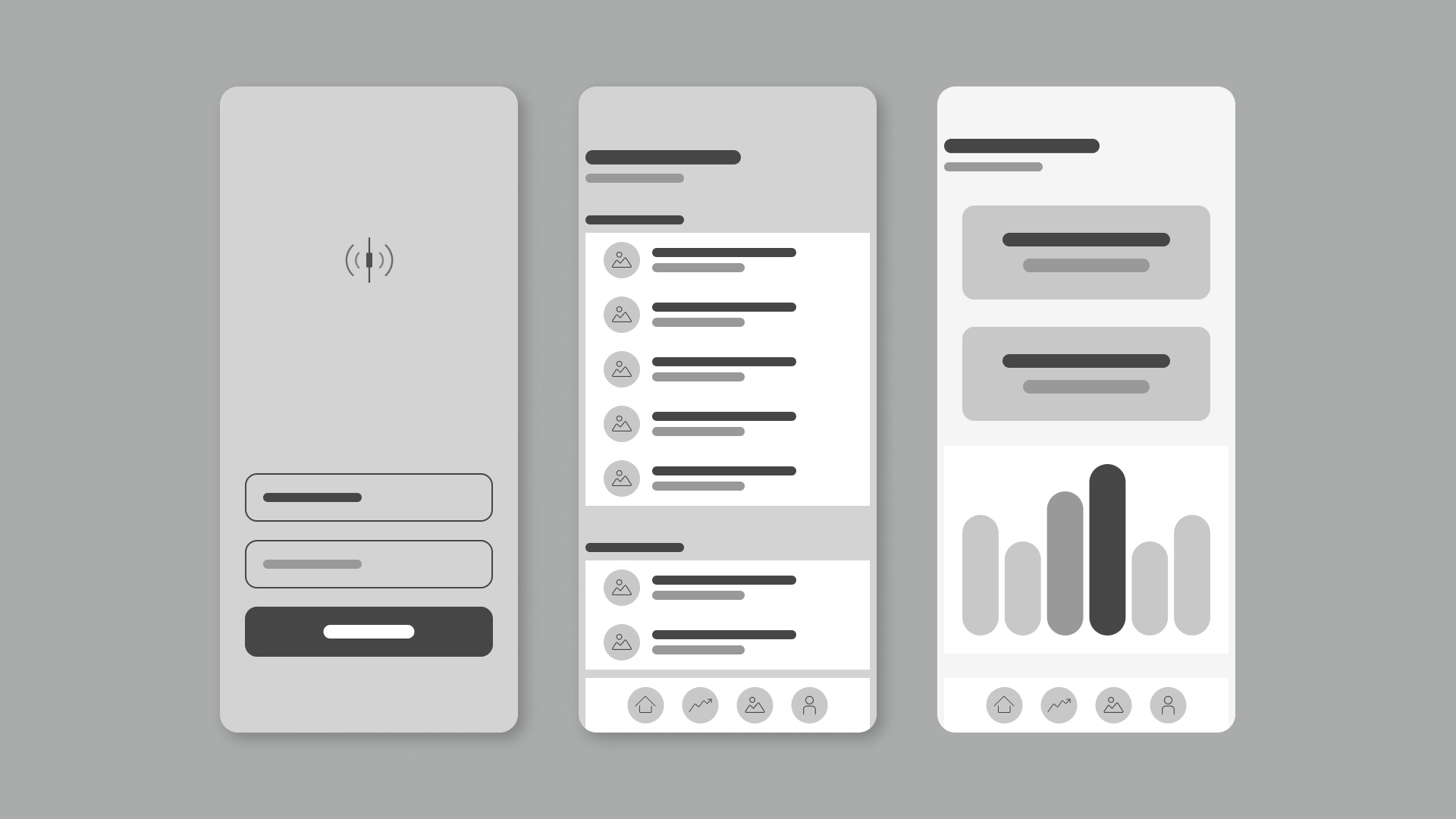
I explored design solutions using quick sketches and basic layouts to define hierarchy and structure without going into visual detail.
The focus was on how to present critical information immediately, prioritizing signal, action, and feedback.
This stage allowed me to quickly validate concepts before moving directly to high-fidelity wireframes.
📱 Wireframes — High-Fidelity
I developed FlareFX’s high-fidelity wireframes with a mobile-first, action-oriented approach, prioritizing the speed of Forex signal consumption and the perceived value of a subscription product.
The design leverages full-screen displays with a clear visual hierarchy that allows users to identify the signal, context, and action in seconds. Clean layouts, legible typography, and a controlled color palette were used to reduce visual noise and reinforce trust.
Each screen was designed to minimize friction between the received signal and trade execution, ensuring a clear, straightforward, and consistent experience throughout the product flow.